Tuesday, November 10, 2015

Photospheres Across the Pacific

Photosphere showing Statendam in Hilo, Hawaii - view in
Google Maps at https://goo.gl/maps/VHbZGSRETNA2

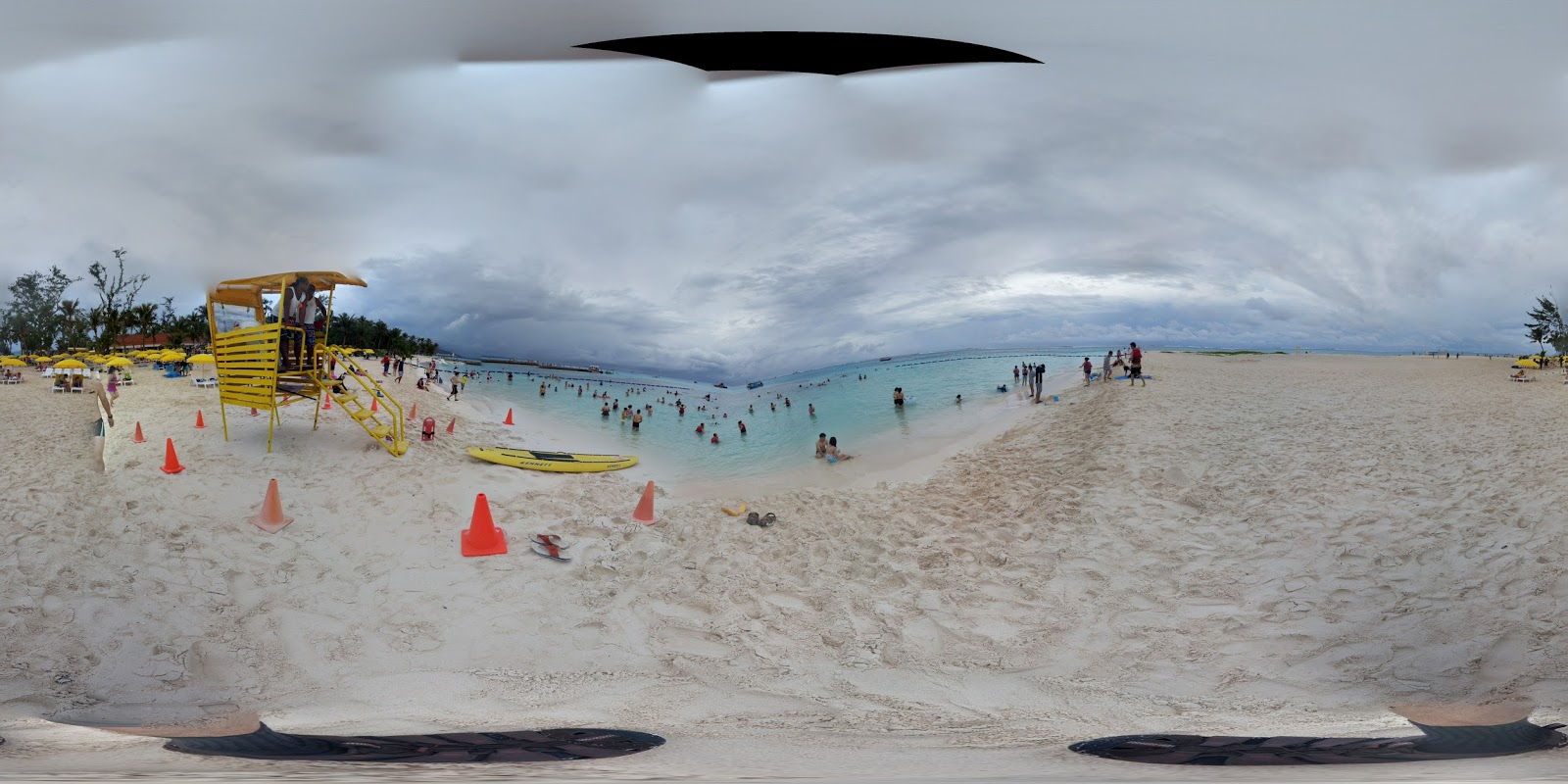
Photospheres are a new and exciting way of capturing some of your most scenic locations on a voyage.  I've posted a few of my latest photospheres from the final voyage of the Statendam on Google Maps.  The photo above looks strange until you go to the google maps version and open it as a photosphere.  It feels like you're standing inside a bubble.  This one shows the Statendam docked in Hilo on its final voyage across the Pacific.  We joined the ship in Hilo and I presented a series of lectures across to Singapore.

The easiest way to create a photosphere is with an Android cell phone after downloading the Google camera app.  You can also use a regular camera but it takes more work stitching all the photos together into a panorama and processing the results through another app.  There's an excellent tutorial online at geojournalism.org

Taken at the entrance to Lihue harbour in Kaui, Hawaii -
see https://goo.gl/maps/LbGzYr5a28R2
This was taken at Managaha beach, Islet Managaha, Saipan... it may
not be accepted to Google Maps because of the missing piece of sky
Once you've taken a photosphere, you can upload it to Google Maps and it will be available for everyone to see.  One of the neatest things is that you can see how many views your photosphere receives - or any photo uploaded to G Maps for that matter.  One of my photospheres has had over 6,000 views in a matter of three months.

Directions for uploading photospheres are available on the Street view site.  One thing I've noticed with Google -- often unfortunately! -- is that they change things frequently... by the time you read this they may have a whole new approach to all of this... at which point you might have to search for the most recent information.

You can see fantastic photospheres that people have taken all across the planet by visiting the Street view site.

Saturday, October 24, 2015

Statendam Farewell Voyage


Dear friends from the Statendam -- thank you so much for your kind support and amazing attendance during my lecture series, as we crossed the Pacific from Hawaii to Singapore.  We had a lot of fun, didn't we! 

Here are a couple of the quotes that I used during my presentations... please feel free to download copies.


I managed to capture photos of an Oriental Pied Hornbill and Java Sparrow while we were in Kota Kinabalu, Malaysia.
Oriental Pied Hornbill
Java Sparrow
 Can you believe we were wandering the wilds of Borneo just a few days ago!  (Ok -- perhaps we weren't exactly in the wilds, but we did manage to hang onto our heads, so that makes for a good story!)

Happy travels wherever you may be in the world.  Please sign up for email updates over on the right.

Thanks again!
George

PS: my next post will be on some of the Photospheres that I captured on our voyage.

Tuesday, August 4, 2015

An Invisible Sea Creature

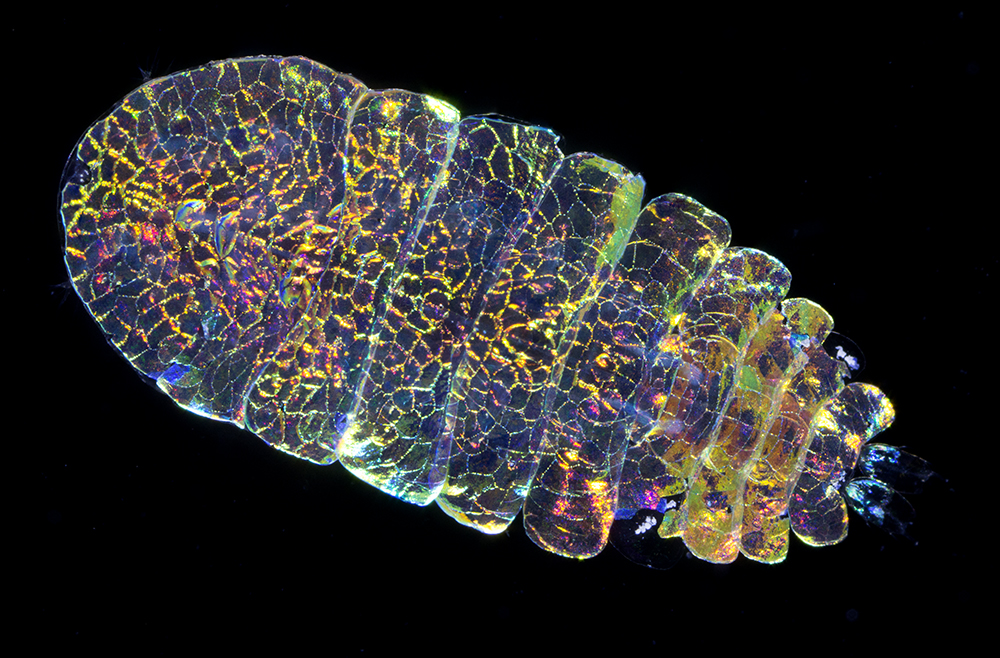
Have a look at this amazing creature -- the Sea Sapphire.  Males can make themselves amazingly invisible.
Photo by scientist, wildlife photographer and filmmaker Stefan Siebert.

Learn how the Sea Sapphire does this amazing trick in this article in Deep Sea News:
"...a sea sapphire’s color has more in common with an oil sheen than a pigmented jewel. Combine this nifty trick with the sea sapphire’s impressively transparent body, and you have an animal as radiant as a star in one moment, and invisible in the next."

Friday, July 24, 2015

Amazing Birds of Paradise: Lessons in Evolution

This video shows some birds that simply don't look real!!  Highly recommended!  It also illustrates the paradoxical nature of being male... sometimes you have to be pretty outlandish to land a female.  But what about attracting predators...?  Where's the evolutionary advantage...?  Outlandish males are the 'fittest' and get to pass on their genes.  Moral of the story: males are expendable!!  So what if a few get eaten... there are always plenty more where they came from!

The Birds-of-Paradise Project reveals the astounding beauty of 39 of the most exquisitely specialized animals on earth. After 8 years and 18 expeditions to New Guinea, Australia, and nearby islands, Cornell Lab scientist Ed Scholes and National Geographic photojournalist Tim Laman succeeded in capturing images of all 39 species in the bird-of-paradise family for the first time ever. This trailer gives a sense of their monumental undertaking and the spectacular footage that resulted. Filmed by Tim Laman, Ed Scholes, and Eric Liner.