Showing posts with label research. Show all posts

Thursday, January 25, 2018

Best Biology books of 2017


Here's an excellent list if you're like me and always on the look out for the latest science books.  Grrrlscientist does a wonderful job of summarizing the contents.
https://www.forbes.com/sites/grrlscientist/2017/12/31/the-10-best-biology-books-of-2017/#41d3837a7a24

I also enjoy her blog updates at
Expecto patronum
https://tinyletter.com/grrlscientist/


Saturday, January 6, 2018

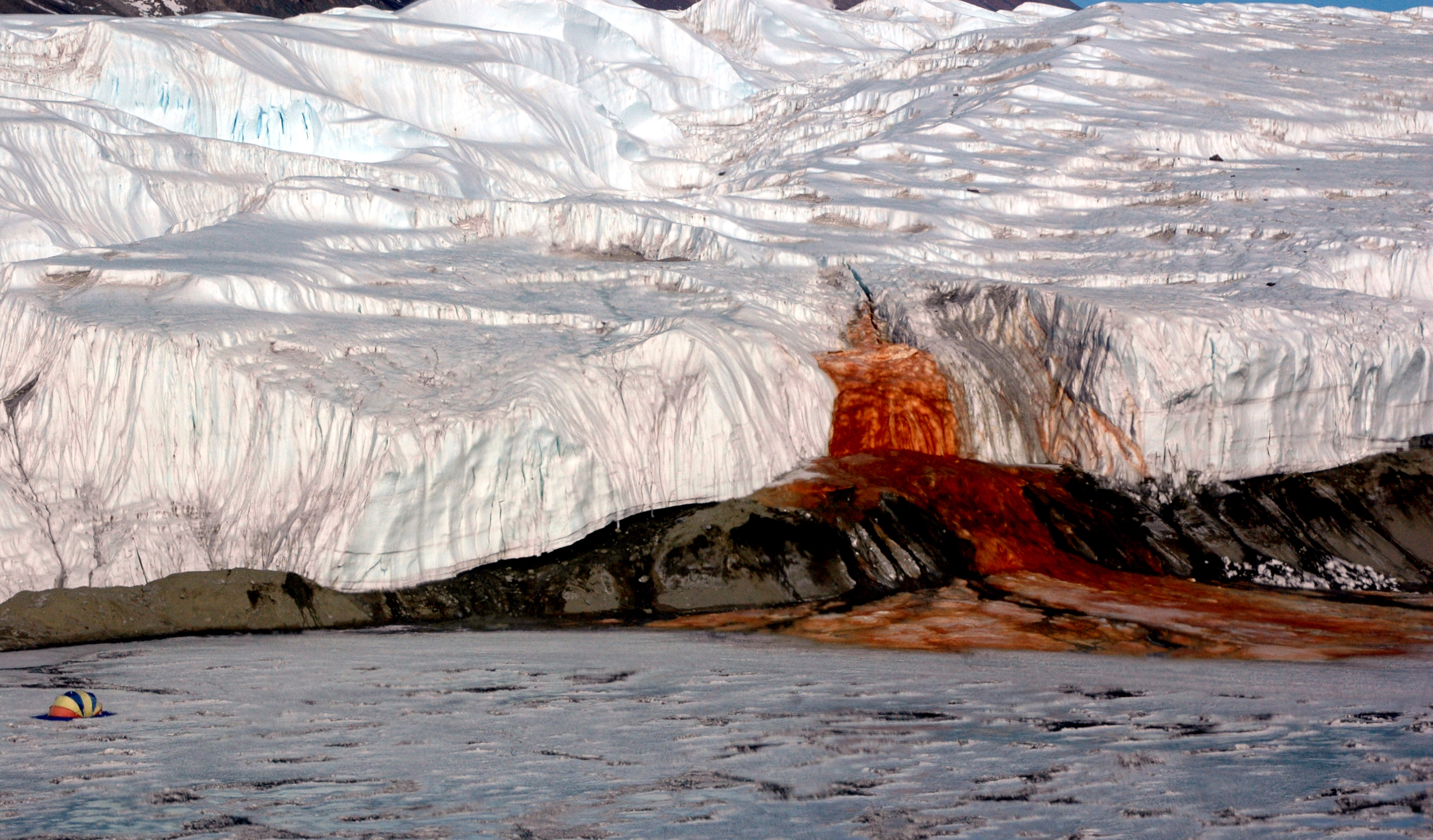
Blood Falls!! REALLY!!

It does exist... but where...???


Here's one of those stories that I just have to share.  The story of Blood Falls and the creatures that live there... it is almost beyond belief.  Microbes that "breath" iron and metabolize sulfates... an ecosystem we've never observed anywhere else on earth.

Blood Falls!!  Found at the foot of the Taylor Glacier in Antarctica.
77°43'14.5"S 162°15'28.9"E
-77.720683, 162.258037

 Check out the location on Google Maps

Here's a short excerpt from the Wikipedia entry:

Blood Falls is an outflow of an iron oxide-tainted plume of saltwater, flowing from the tongue of Taylor Glacier onto the ice-covered surface of West Lake Bonney in the Taylor Valley of the McMurdo Dry Valleys in Victoria Land, East Antarctica.
Iron-rich hypersaline water sporadically emerges from small fissures in the ice cascades. The saltwater source is a subglacial pool of unknown size overlain by about 400 metres (1,300 ft) of ice several kilometers from its tiny outlet at Blood Falls.
The reddish deposit was found in 1911 by the Australian geologist Griffith Taylor, who first explored the valley that bears his name.[1] The Antarctica pioneers first attributed the red color to red algae, but later it was proven to be due to iron oxides.

Chemical and microbial analyses both indicate that a rare subglacial ecosystem of autotrophic bacteria developed that metabolizes sulfate and ferric ions.[3][4] According to geomicrobiologist Jill Mikucki at the University of Tennessee, water samples from Blood Falls contained at least 17 different types of microbes, and almost no oxygen.[3] An explanation may be that the microbes use sulfate as a catalyst to respire with ferric ions and metabolize the trace levels of organic matter trapped with them. Such a metabolic process had never before been observed in nature.


Curiosity.com recently published a good article:
https://curiosity.com/topics/blood-falls-is-a-scarlet-oddity-in-an-antarctic-glacier-curiosity?utm_campaign=daily-digest&utm_source=sendgrid&utm_medium=email


Tuesday, August 4, 2015

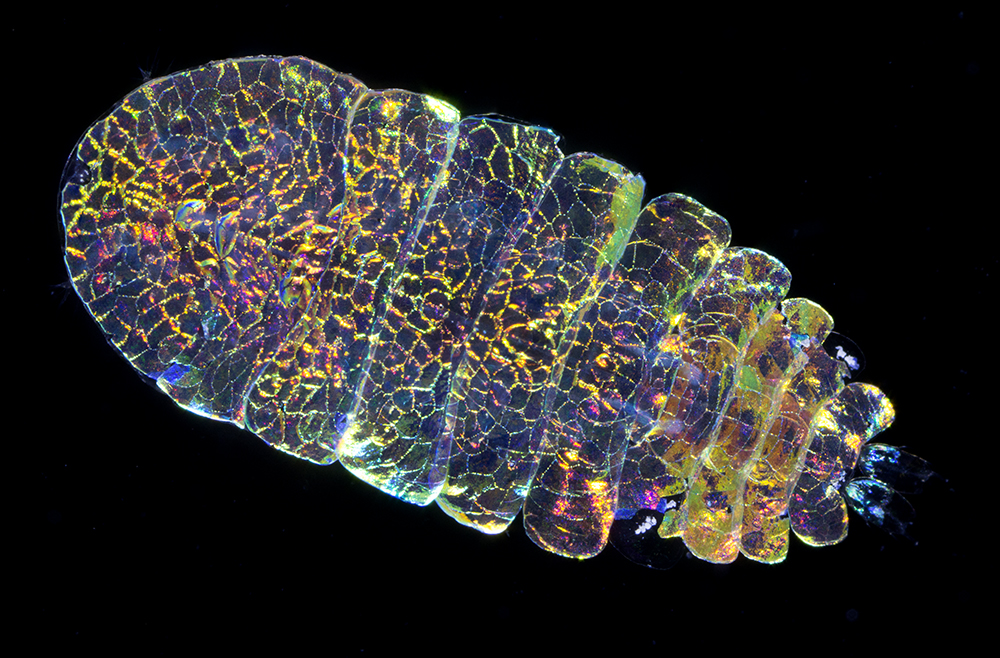
An Invisible Sea Creature

Have a look at this amazing creature -- the Sea Sapphire.  Males can make themselves amazingly invisible.
Photo by scientist, wildlife photographer and filmmaker Stefan Siebert.

Learn how the Sea Sapphire does this amazing trick in this article in Deep Sea News:
"...a sea sapphire’s color has more in common with an oil sheen than a pigmented jewel. Combine this nifty trick with the sea sapphire’s impressively transparent body, and you have an animal as radiant as a star in one moment, and invisible in the next."

Saturday, May 2, 2015

Triple Gains if Fisheries Closed on High Seas


An important study was recently published by economists Crow White and Christopher Costello, who examined the provocative idea of completely closing international waters to fishing.  They found that closing the High Seas to fishing would, on a global scale, simultaneously give rise to large gains in fisheries profit (>100%), fisheries yields (>30%), and fish stock conservation (>150%).

Amberjack.  Photo by Dee Wescott

View the study here


Abstract
The world's oceans are governed as a system of over 150 sovereign exclusive economic zones (EEZs, ~42% of the ocean) and one large high seas (HS) commons (~58% of ocean) with essentially open access. Many high-valued fish species such as tuna, billfish, and shark migrate around these large oceanic regions, which as a consequence of competition across EEZs and a global race-to-fish on the HS, have been over-exploited and now return far less than their economic potential. We address this global challenge by analyzing with a spatial bioeconomic model the effects of completely closing the HS to fishing. This policy both induces cooperation among countries in the exploitation of migratory stocks and provides a refuge sufficiently large to recover and maintain these stocks at levels close to those that would maximize fisheries returns. We find that completely closing the HS to fishing would simultaneously give rise to large gains in fisheries profit (>100%), fisheries yields (>30%), and fish stock conservation (>150%). We also find that changing EEZ size may benefit some fisheries; nonetheless, a complete closure of the HS still returns larger fishery and conservation outcomes than does a HS open to fishing.