Showing posts with label undersea organisms. Show all posts

Friday, March 29, 2024

History of Life on Our Planet over 4.5 Billion Years

How Do You Represent Billions of Years of Life on Our Planet?

4.5 Billion Years of Earth History as a Football Field

As a biologist one of the key concepts I like to convey to audiences is what we call Deep Time.  We can talk about 300,000 million years, for example, but what does this number really mean?  How can we get our heads around such vast periods of time?


This is super important because it is key to understanding the power of evolution through natural selection over the eons.  Tiny changes over millions of years add up as species adapt to changing climates, geographic isolation, new predators, loss of food resources, etc.


One of the best depictions of Deep Time that I've run across is the metaphor of a football field to represent the full 4.5 Billion Years of Earth history.  In my presentations, I use an excellent video that I've discovered.

You can see this 4 minute video on my website.


All the best from the Indian Ocean, one day from Port Louis on the island of Mauritius.
George


Saturday, January 6, 2018

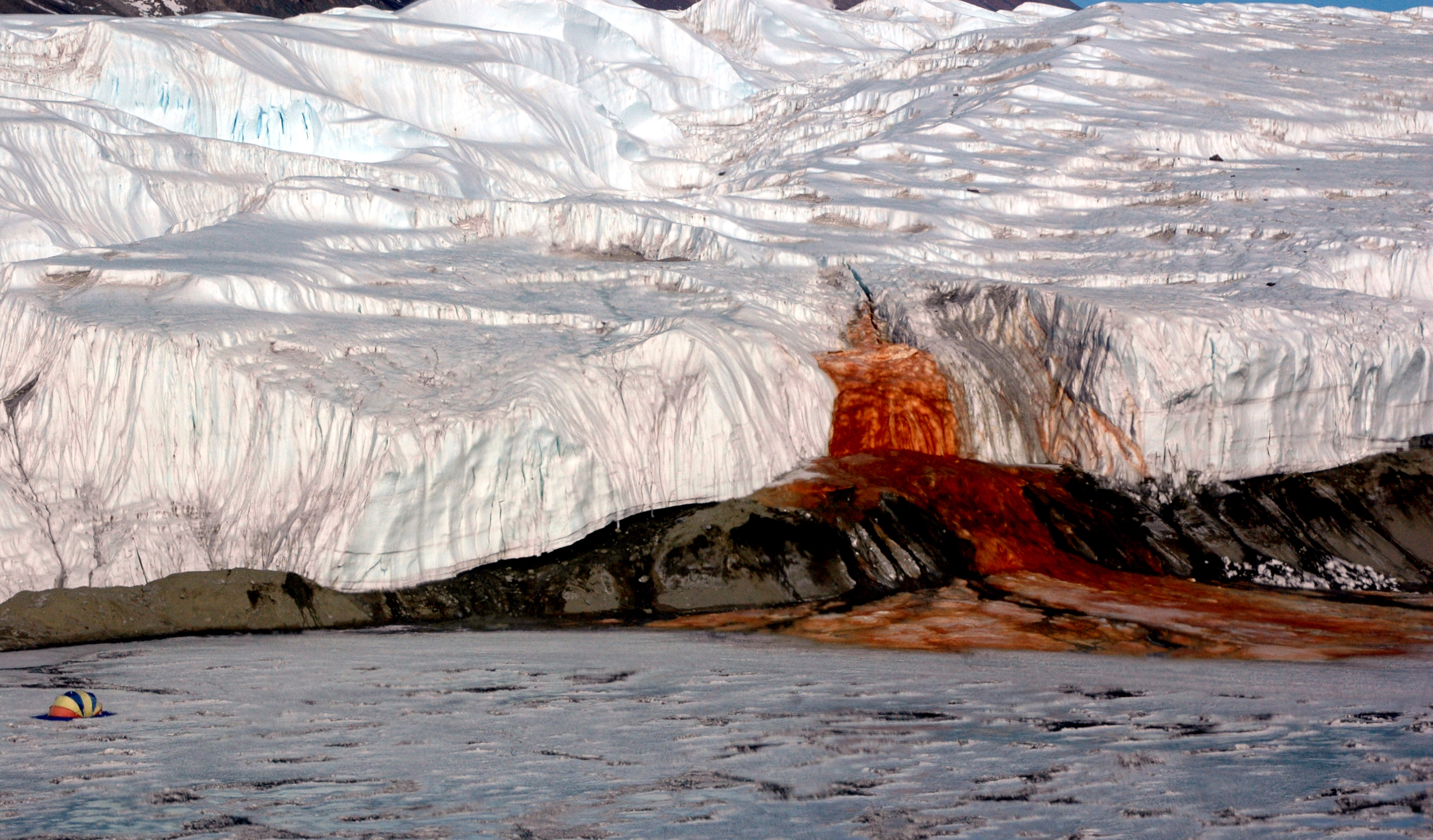
Blood Falls!! REALLY!!

It does exist... but where...???


Here's one of those stories that I just have to share.  The story of Blood Falls and the creatures that live there... it is almost beyond belief.  Microbes that "breath" iron and metabolize sulfates... an ecosystem we've never observed anywhere else on earth.

Blood Falls!!  Found at the foot of the Taylor Glacier in Antarctica.
77°43'14.5"S 162°15'28.9"E
-77.720683, 162.258037

 Check out the location on Google Maps

Here's a short excerpt from the Wikipedia entry:

Blood Falls is an outflow of an iron oxide-tainted plume of saltwater, flowing from the tongue of Taylor Glacier onto the ice-covered surface of West Lake Bonney in the Taylor Valley of the McMurdo Dry Valleys in Victoria Land, East Antarctica.
Iron-rich hypersaline water sporadically emerges from small fissures in the ice cascades. The saltwater source is a subglacial pool of unknown size overlain by about 400 metres (1,300 ft) of ice several kilometers from its tiny outlet at Blood Falls.
The reddish deposit was found in 1911 by the Australian geologist Griffith Taylor, who first explored the valley that bears his name.[1] The Antarctica pioneers first attributed the red color to red algae, but later it was proven to be due to iron oxides.

Chemical and microbial analyses both indicate that a rare subglacial ecosystem of autotrophic bacteria developed that metabolizes sulfate and ferric ions.[3][4] According to geomicrobiologist Jill Mikucki at the University of Tennessee, water samples from Blood Falls contained at least 17 different types of microbes, and almost no oxygen.[3] An explanation may be that the microbes use sulfate as a catalyst to respire with ferric ions and metabolize the trace levels of organic matter trapped with them. Such a metabolic process had never before been observed in nature.


Curiosity.com recently published a good article:
https://curiosity.com/topics/blood-falls-is-a-scarlet-oddity-in-an-antarctic-glacier-curiosity?utm_campaign=daily-digest&utm_source=sendgrid&utm_medium=email


Tuesday, August 4, 2015

An Invisible Sea Creature

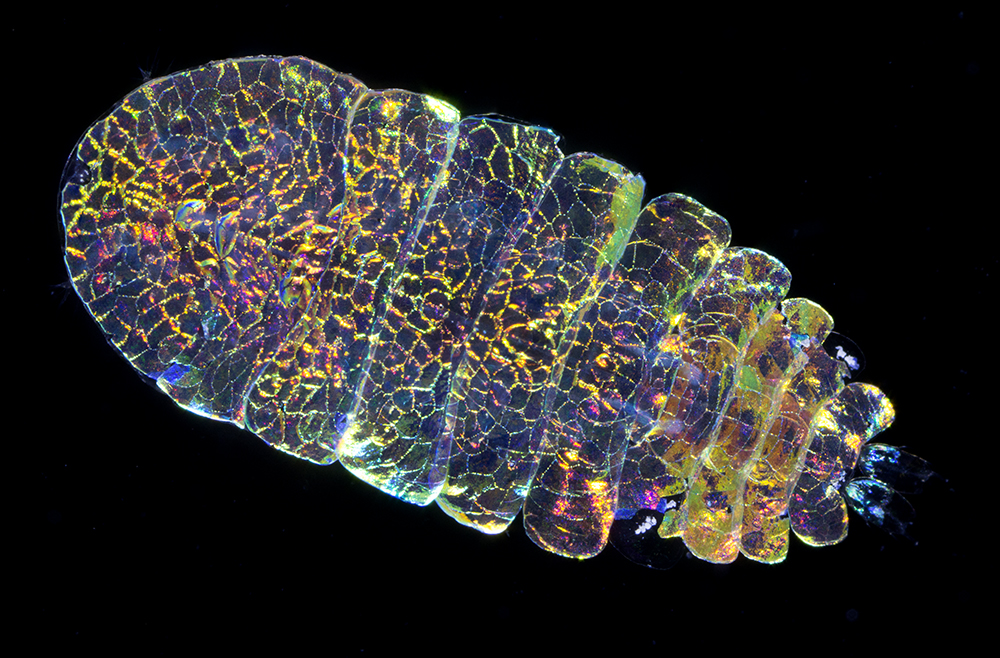
Have a look at this amazing creature -- the Sea Sapphire.  Males can make themselves amazingly invisible.
Photo by scientist, wildlife photographer and filmmaker Stefan Siebert.

Learn how the Sea Sapphire does this amazing trick in this article in Deep Sea News:
"...a sea sapphire’s color has more in common with an oil sheen than a pigmented jewel. Combine this nifty trick with the sea sapphire’s impressively transparent body, and you have an animal as radiant as a star in one moment, and invisible in the next."

Thursday, September 19, 2013

Ice Brinicles- The Freezing Killer

Amazing Photos & Video of Ice Brinicles- The Freezing Killer

Ice Brinicles
A brinicle or an ice stalactite is a formation of sea ice that gets generated when extremely cold saline water is introduced in ocean water. During winter, the temperature above the sea is -20C, whereas, the temperature of the sea water is only -1.9C. Heat tends to flow from the warmer sea to the extremely cold air, resulting in the formation of ice pipes.

The salt in this freshly created ice is concentrated and then later gets pressured into the brine channels. It’s cold and salty traits; make it denser than the water beneath. It results in the sinking of brine in a descending trail freezing the seawater altogether. This process results in forming a delicate ice sheets that develops into what has been called a brinicle.

Watch an amazing time-lapse video in this report by the BBC
-- http://bbc.in/s3xghK

Tuesday, August 7, 2012

Third of Earth's creatures in rock & sediments

Sometimes I wonder why we're so interested in life on other planets.... there's a lot more life on OUR planet than we ever thought possible!!  Marine sediments, for example, comprise a whole new world.... teeming with unknown organisms.
The research submarine Alvin reaches with its mechanical arm to a high-temperature black smoker at the Endeavour Segment, Juan de Fuca Ridge, to study methanogenic microbes. (Credit: Bruce Strickrott of WHOI)

Microbiologist James Holden at the University of Massachusetts Amherst, writes: "Evidence has built over the past 20 years that there's an incredible amount of biomass in Earth's subsurface, in the crust and marine sediments, perhaps as much as all the plants and animals on the surface. We're interested in the microbes in the deep rock, and the best place to study them is at hydrothermal vents at undersea volcanoes. Warm water flows bring the nutrient and energy sources they need."

See the complete article:
Limits of microbial life in an undersea volcano: Third of Earth's organisms live in rock and sediments